
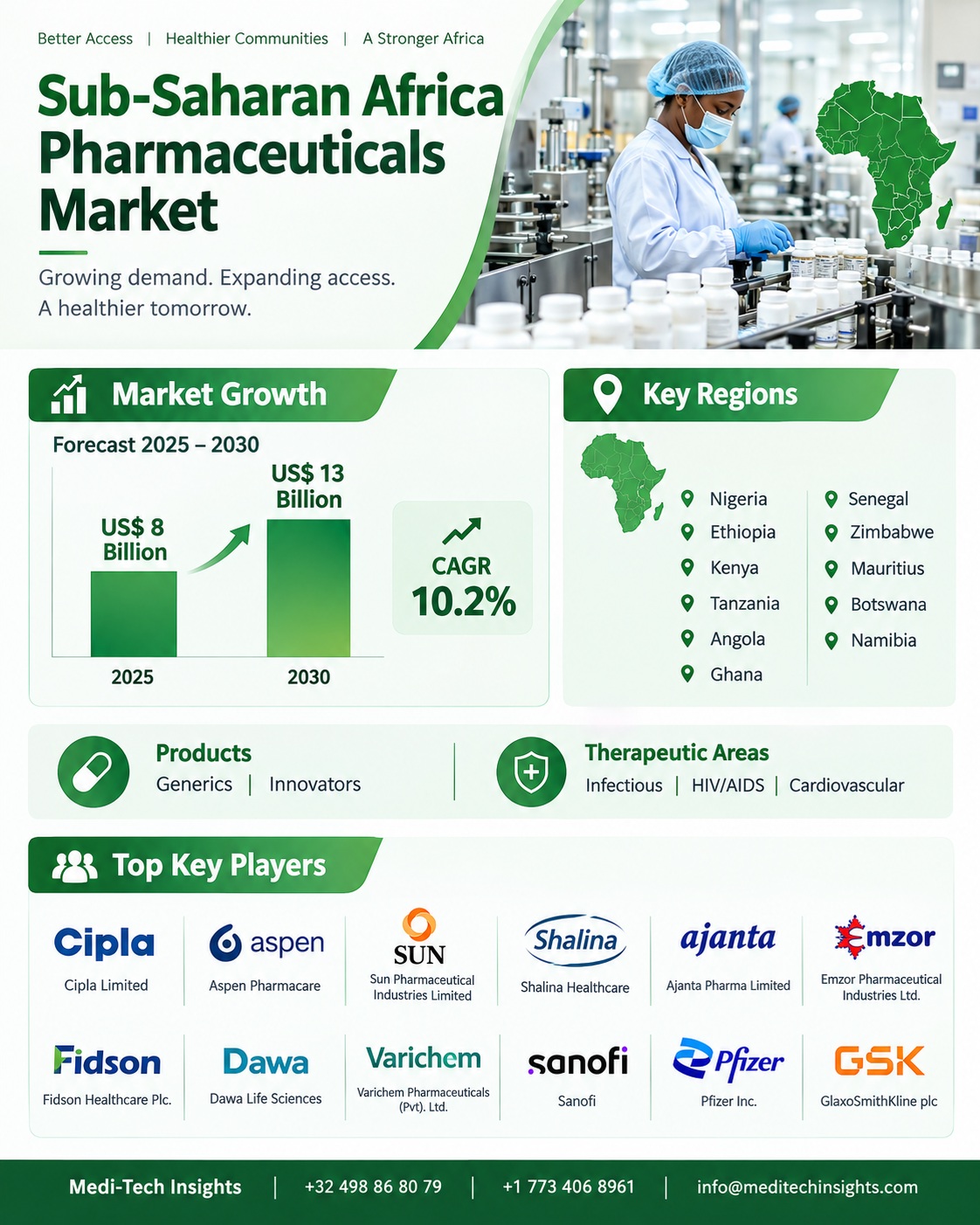
Sub-Saharan Africa’s pharmaceutical market is projected to grow from approximately $8 billion in 2025 to $13 billion by 2030, supported by rising healthcare demand, increasing access to medicines and efforts to expand pharmaceutical manufacturing across the region, according to Medi-Tech Insights.
The Sub-Saharan Africa pharmaceuticals market is forecast to expand at a 10.2% CAGR from 2025 to 2030, highlighting the growing role of the region in the global pharmaceutical industry.
The market includes prescription medicines, generic drugs, over-the-counter medicines and vaccines across countries with significantly different healthcare systems, regulatory environments and levels of pharmaceutical manufacturing.
Healthcare Demand Drives Pharmaceutical Market Growth
Increasing healthcare needs are supporting pharmaceutical demand across Sub-Saharan Africa.
The region continues to face significant infectious disease challenges while also experiencing a growing burden of non-communicable diseases. This combination is creating demand for a broader range of medicines and healthcare products.
Improving healthcare awareness and efforts to expand access to essential medicines are also contributing to pharmaceutical market development.
Generic Drugs Remain a Key Market Segment
Generic medicines are an important component of the Sub-Saharan Africa pharmaceutical market because affordability remains a major consideration for healthcare providers and patients.
As healthcare systems seek to expand access to treatment while managing costs, generic drug manufacturers have opportunities to increase their presence across regional markets.
At the same time, multinational pharmaceutical companies are continuing to develop and commercialize innovative medicines and expand their product portfolios through partnerships and other market strategies.
Pharmaceutical Manufacturing Investment Increases
The development of local pharmaceutical manufacturing is becoming an increasingly important issue across Sub-Saharan Africa.
Greater domestic production could help countries reduce reliance on imported medicines and improve the resilience of pharmaceutical supply chains.
Investment opportunities extend beyond drug manufacturing to include pharmaceutical packaging, contract manufacturing, distribution, logistics and related healthcare infrastructure.
Nigeria, Kenya and Other Markets Covered
The market analysis from Medi-Tech Insights covers multiple Sub-Saharan African countries, including Nigeria, Ethiopia, Kenya, Tanzania, Angola, Ghana, Senegal, Zimbabwe, Mauritius, Botswana and Namibia.
These markets differ in population size, healthcare expenditure, regulatory structures, pharmaceutical manufacturing capabilities and access to healthcare.
Such differences are important for pharmaceutical companies considering expansion because market opportunities and commercial strategies can vary significantly from one country to another.
Major Pharmaceutical Companies in the Region
The competitive landscape includes multinational pharmaceutical companies as well as regional and local manufacturers.
Companies identified by Medi-Tech Insights include Cipla, Aspen Pharma Group, Sun Pharma, Shalina Healthcare, Ajanta Pharma, Emzor Pharmaceutical Industries, Fidson Healthcare, Dawa Life Sciences, Varichem Pharmaceuticals, Sanofi, Pfizer and GSK.
Companies operating in the region are pursuing strategies that include product launches, partnerships, manufacturing investments and expansion of distribution networks.
Sub-Saharan Africa Pharmaceuticals Market Outlook
The market is expected to add approximately $5 billion in value between 2025 and 2030, based on the market figures provided by Medi-Tech Insights.
Future growth will depend on factors including healthcare investment, medicine affordability, regulatory development, local manufacturing capacity and the expansion of pharmaceutical distribution networks.
The region’s pharmaceutical market is also likely to remain highly diverse, with individual countries presenting different opportunities and challenges for manufacturers, distributors and investors.
As governments and industry participants continue to focus on improving medicine availability and strengthening healthcare infrastructure, pharmaceutical companies are expected to assess opportunities across both established and emerging markets in Sub-Saharan Africa.
Source: Medi-Tech Insights, Sub-Saharan Africa Pharmaceuticals Market market overview. The market figures and company list above are based on the referenced LinkedIn post.

Jeff Berman is a healthcare and medical technology journalist with over 7 years of experience covering the global medtech, biotechnology, pharmaceutical, and healthcare sectors. As a contributor to Just MedTech, he specializes in industry news, market trends, regulatory developments, mergers and acquisitions, and emerging innovations shaping the future of healthcare worldwide. Contact: jeff.b@justmedtech.com.